
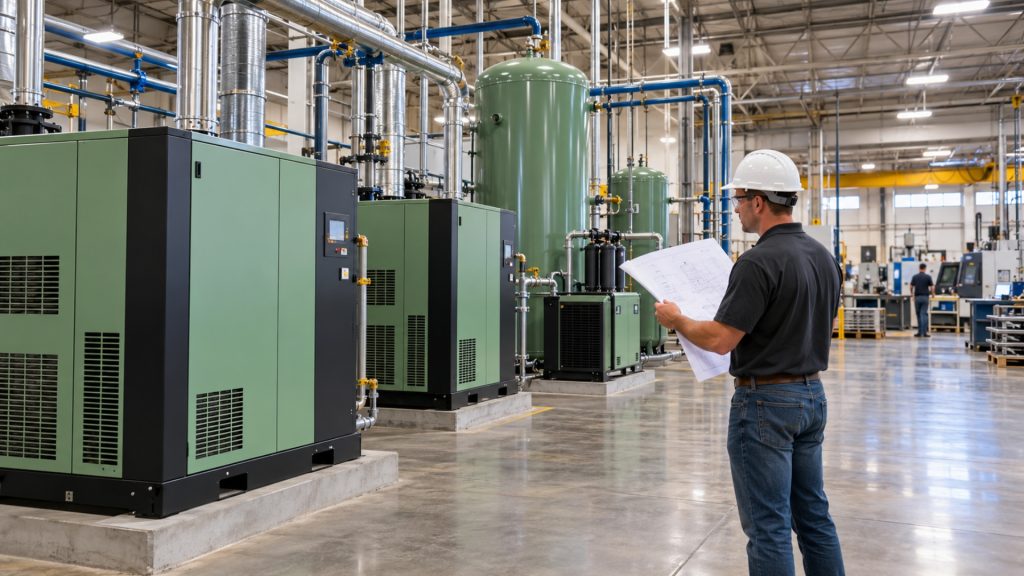
Summary: Compressed air system design should account for current demand and future growth so new equipment or increased production doesn’t create capacity, pressure, or reliability problems. Instead of simply oversizing a compressor, you should plan piping, storage, controls, air treatment, redundancy, and expansion capacity as one complete system. If you need help designing an air compressor system in Colorado Springs, Remco Equipment can evaluate, design, install, service, and optimize systems to support your long-term growth.
Why Does Future Growth Matter in Compressed Air System Design?
A common mistake in compressed air system design is focusing almost entirely on the compressor itself. You determine how much air your current equipment uses, select a compressor that can produce that amount, and assume the job is finished. In reality, your compressor is only one part of a system that also includes piping, storage, dryers, filtration, controls, drains, ventilation, and the equipment using the air. If those components are not planned together, adding capacity later can become much more difficult and expensive.
To calculate future growth, you need to understand what type of growth is likely and how it will affect air demand. The Compressed Air & Gas Institute recommends evaluating three basic factors when sizing compressed air equipment: demand, pressure, and air quality. When an existing system is being expanded, CAGI recommends establishing a baseline of minimum, average, and maximum demand before adding anticipated future requirements.
Read Also: Common Causes of Low Compressed Air Pressure in Industrial Facilities
Start With Your Actual Air Demand
Before you plan for new compressed air system designs, you need to know what your plant is doing today. Your capacity could be distorted by an oversized compressor, leaks, artificial demand, pressure problems, or poor controls. Adding another compressor before identifying those conditions can increase operating costs without fixing the real problem.
A proper system evaluation looks at pressure and airflow under actual production conditions. You want to understand your base demand, average operating demand, peak events, and how demand changes between shifts or production schedules. The U.S. Department of Energy recommends evaluating a compressed air system’s load profile. Once you have that information, you can make future capacity decisions based on measurable operating conditions.
How Much Extra Capacity Should You Build Into the System?
No single percentage of extra capacity works for every compressed air system design. Your expansion allowance should be connected to realistic plans for equipment, production, operating hours, and facility growth. If you know you will add two machines next year, you can incorporate their expected air requirements directly into the design. If future plans are less certain, the system can be designed to make additional capacity easier to integrate without dramatically oversizing today’s equipment.
You should also separate average demand from peak demand; this distinction can save you from buying compressor capacity that you only need for seconds at a time. It can also improve pressure stability when equipment cycles on and off throughout the plant. Your future-growth plan should therefore answer more than, “How many additional CFM will we need?” It should also determine when you will need that air, at what pressure, for how long, and where in the facility it will be consumed.
Related: Why Does My Air Compressor Keep Cycling On and Off?
Design the Distribution System for Expansion
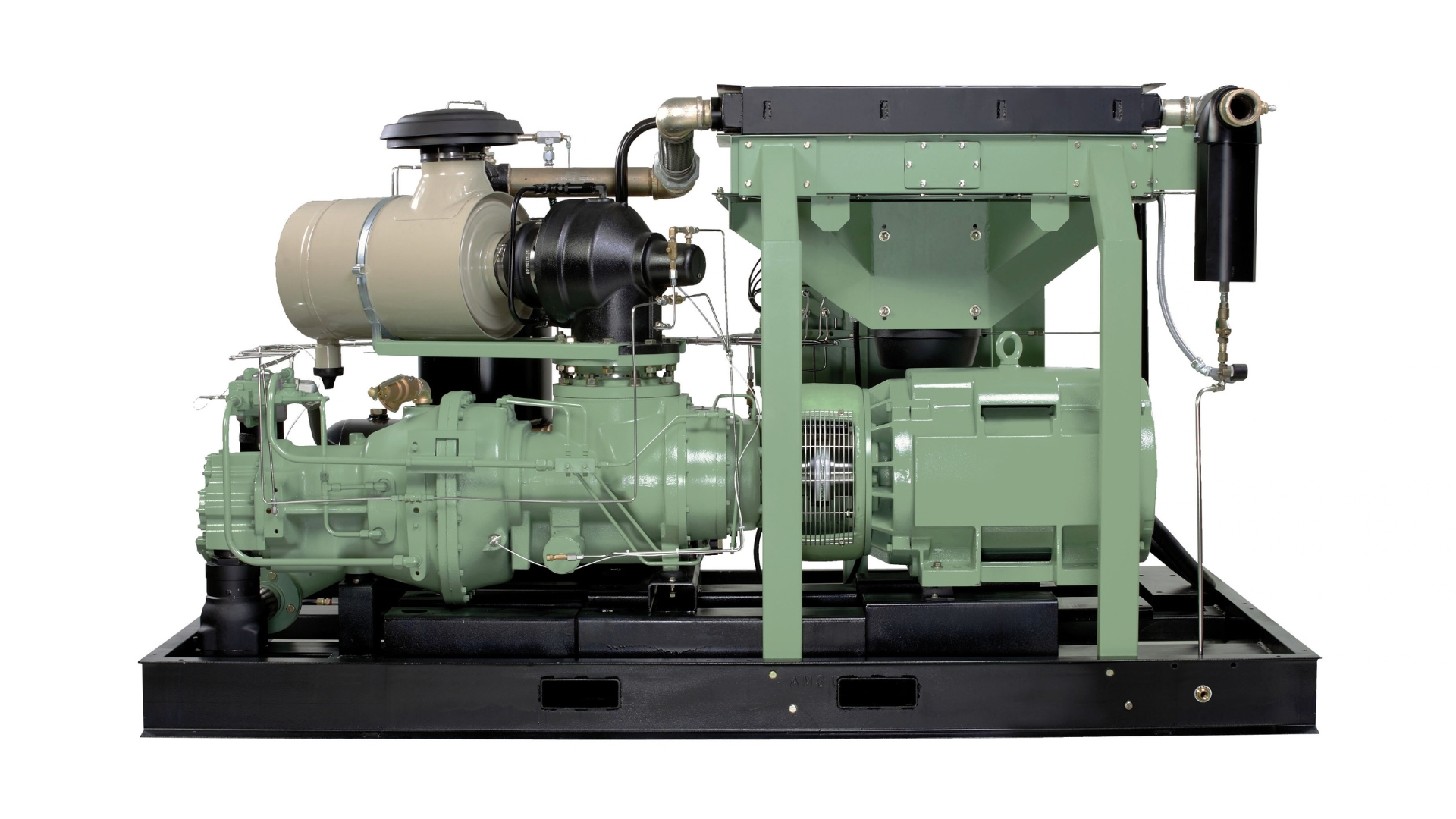
Your piping system can either make future expansion easier or harder. Adding compressor horsepower won’t fix a distribution system that cannot move enough air without excessive pressure drop. Pipe diameter, layout, fittings, filters, valves, and other restrictions all affect how effectively compressed air reaches your equipment.
When you anticipate growth, the distribution network should be designed with practical expansion points. That may mean planning the main header for future airflow, installing a loop system where appropriate, or providing connections for areas where additional production equipment is expected.
You also need to consider where demand will grow inside the building. Adding several machines at the far end of an undersized branch line can create pressure problems even if your compressor has plenty of available capacity. A system-level compressed air system design evaluates both supply and distribution so additional airflow reaches the point of use as intended.
Do Not Use Higher Pressure to Cover a Poor Design
When pressure drops at the point of use, one of the easiest responses is increasing compressor discharge pressure. That may temporarily satisfy the equipment at the end of the line, but it can increase energy use and mask restrictions elsewhere in the system. Higher pressure can also increase air consumption through leaks and unregulated end uses. Instead of continually raising pressure, find out why the required pressure isn’t reaching the equipment.
A properly engineered compressed air system design gives you room to grow without building unnecessary operating costs into the plant. Instead of compensating for restrictions with more horsepower and pressure, you improve how the entire system moves and uses air. That can help protect both reliability and your long-term energy budget. It also makes diagnosing future problems much easier because you built the system around known requirements rather than workarounds.
Build Redundancy Around the Cost of Downtime
Future growth can change the consequences of a compressor failure. A system that once supported a few machines may eventually supply an entire production area, making compressed air loss much more expensive. If downtime can stop your operation, redundancy should be considered during the design stage.
Redundancy does not necessarily mean buying two oversized compressors. Depending on your operation, you may benefit from multiple compressors staged to match changing demand while maintaining backup capacity. Redundancy can also make scheduled maintenance easier because you are not forced to choose between servicing equipment and keeping production online.
Consider Controls Before Adding More Horsepower
As your system grows, controls become increasingly important. Multiple compressors operating without an effective control strategy can fight each other, cycle unnecessarily, or maintain more pressure than your facility requires. That can leave you paying for additional equipment without receiving the efficiency or reliability you expected. A coordinated system should match compressor output as closely as practical to the plant’s actual demand.
This is another area where an engineering-first approach can prevent unnecessary spending on your compressed air system design. Your expansion plan might require another compressor, but it might also require changes to sequencing, storage, distribution, or controls. Reviewing those options together helps you invest where additional capacity will deliver the greatest operational benefit. It also reduces the chance that today’s expansion creates tomorrow’s efficiency problem.
You May Also Like: 10 Warning Signs Your Air Compressor Needs Service
Why Choose a Turnkey Compressed Air Partner?
When different companies design, sell, install, and service separate portions of your compressed air system, important details can fall between the cracks. The compressor may meet its specifications, but the piping may create excessive pressure loss, the storage may be inadequate, or the control strategy may not match your production profile.
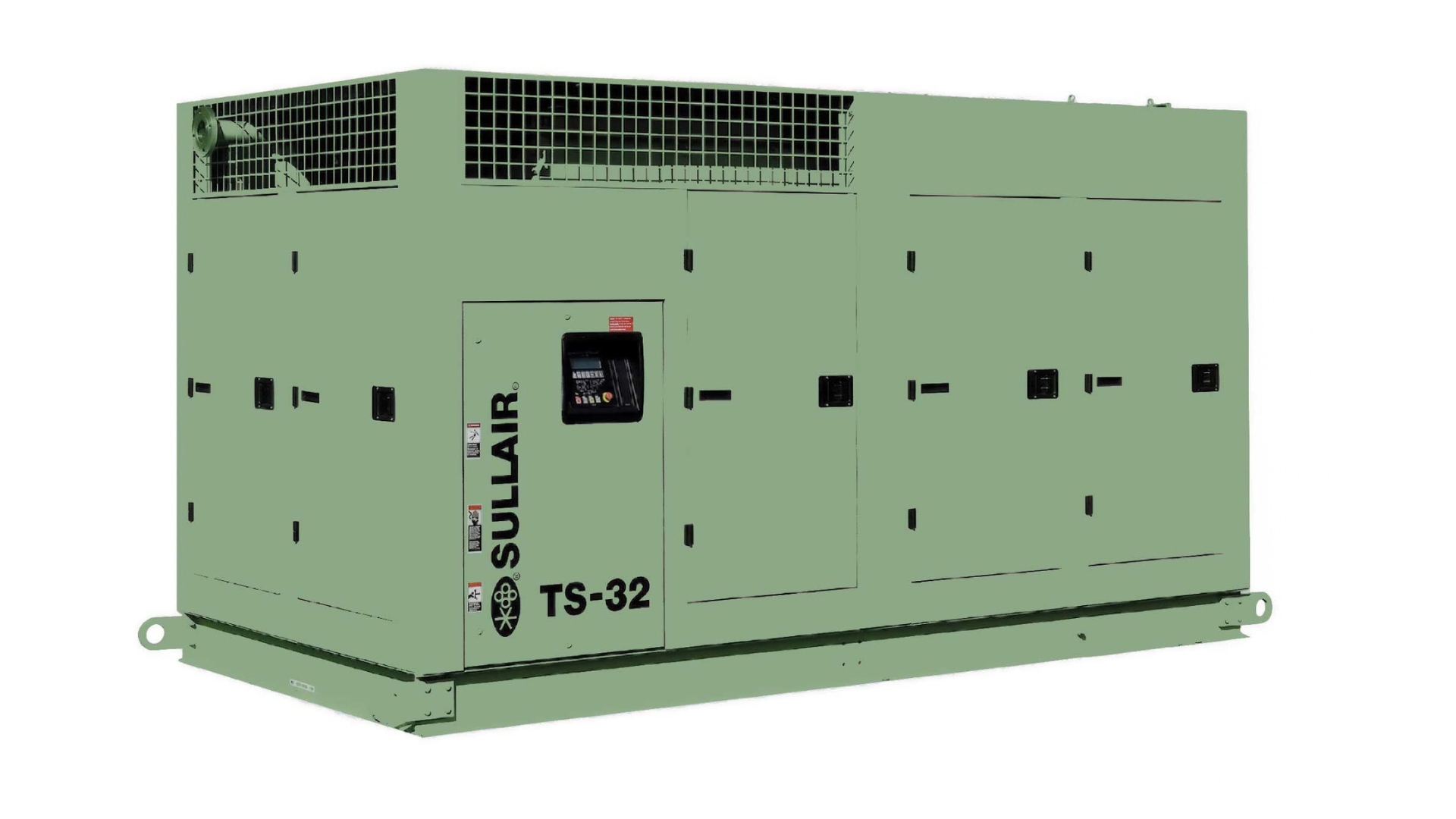
At Remco, we provide Sullair compressed air system engineering, equipment, installation, preventive maintenance, troubleshooting, repair, optimization, and accessories for industrial operations throughout Southern Colorado. Our factory-trained technicians and engineering-first approach allow you to work with a team that understands the system from initial design through long-term maintenance. Instead of planning only for the equipment you are purchasing today, you can develop a system strategy around reliability, efficiency, serviceability, and future capacity.
Plan Your Compressed Air System Design Before Growth Creates a Problem
The best time to evaluate compressed air system design is before your next expansion puts the existing system at its limit. If you are planning an expansion, adding equipment, replacing aging compressors, or questioning whether your existing system can keep up with future production, Remco can help.
Reach out to Remco Equipment to request a free plant evaluation and talk with our team about your current compressed air needs, expected growth, and the best way to engineer a reliable path forward. We can help you evaluate the complete system and develop an expansion strategy for your facility needs.